
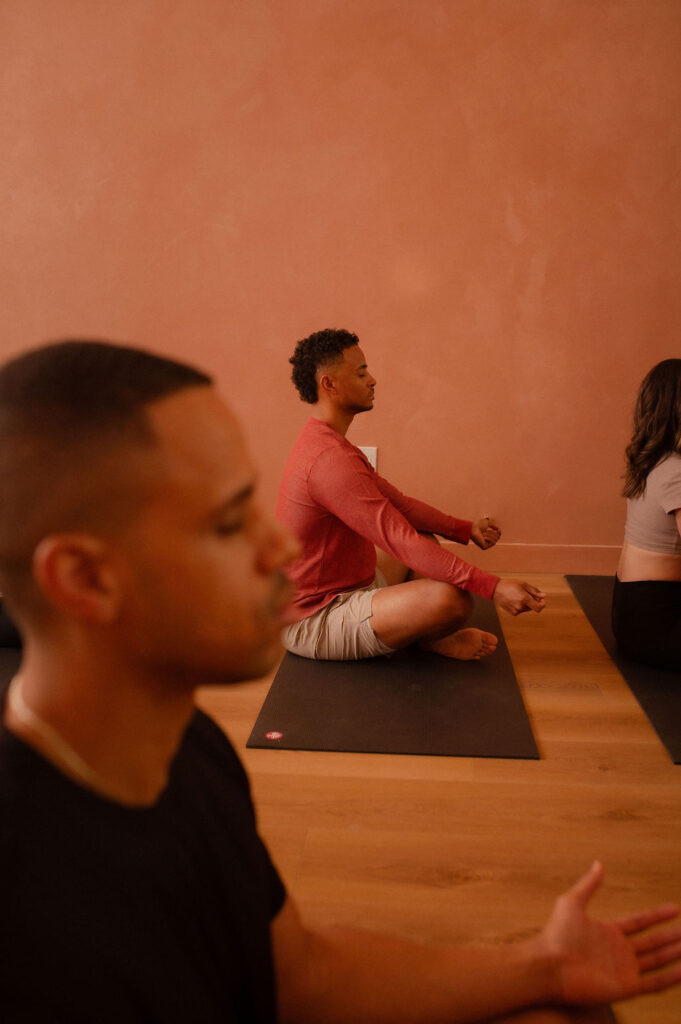
Strength isn’t built through punishment. It’s built through safety, signal, and recovery.
We’ve been sold a version of fitness that looks like a fight. Push harder. Ignore fatigue. Earn your rest.
But your body doesn’t transform because you override it.
Your body transforms when it feels supported enough to adapt.
That’s nervous system science—not motivation.
The foundation most programs miss
Your autonomic nervous system quietly runs the show: energy, sleep, digestion, hormone balance, mood, recovery, and how well your body responds to training.
It’s constantly scanning one question:
Am I safe—or am I under threat?
When your system senses safety, you have access to the physiology of growth:
- repair
- muscle rebuilding
- deeper sleep
- steadier mood
- better recovery
When your system senses threat (from life stress, chronic overwhelm, or workouts that hit too hard), your body shifts into survival physiology:
- stress hormones stay elevated
- inflammation rises
- recovery slows
- the body becomes protective instead of adaptive
This is why so many people “do everything right” and still feel stuck.
Why “go hard” backfires for stressed bodies
Most fitness environments assume you arrive resourced: slept well, emotionally steady, nervous system regulated.
But real life doesn’t work like that.
People arrive carrying:
- deadlines
- caregiving
- nervous system strain
- grief, trauma, chronic stress
- that invisible background hum of being “on” all the time
Then the class asks for more activation. More output. More intensity.
That’s not resilience. That’s stacking stress on a system already near capacity.
Nervous system–first is not “easier.” It’s more effective.
At WORTHY, we build strength the way the body actually learns: through the right dose of challenge inside a container of regulation.
That means:
- Breath-led entry: we start by shifting your state so the body can receive training as growth—not threat
- Infrared heat: supportive warmth that helps muscles open, circulation improve, and recovery pathways engage
- Intentional programming: enough intensity to build resilience, never enough to push you into overwhelm
- A sanctuary, not a gym: your environment matters—because your nervous system responds to everything
When the nervous system is supported, your training stops being a battle.
It becomes a practice—one your body trusts.
The WORTHY reframe
What if “strong” meant:
- you recover well
- you have energy after class
- your nervous system feels steadier
- your strength is sustainable
This is movement that heals.
This is fitness that respects the body’s intelligence.
And yes—this is where real results live.
Transformation starts here: one goal—a regulated nervous system.
Research
- Brief structured respiration vs. mindfulness meditation showed improvements in mood and reductions in physiological arousal (respiratory rate, heart rate, HRV). Cell Reports Medicine (2023).
- Deep, slow breathing can increase parasympathetic activity (HRV indices) and reduce anxiety. Scientific Reports (2021).
- Review: glucocorticoids (cortisol-related pathways) are linked to muscle atrophy through decreased protein synthesis and increased protein breakdown. Frontiers in Physiology (2015).
- Elevated life stress can prolong cortisol recovery after exhaustive exercise (up to ~20 hours), increasing recovery burden. Int’l Journal of Behavioral Medicine (2005).
- Review: chronic stress can drive inflammation and elevated cortisol, contributing to reduced protein synthesis and muscle atrophy pathways. International Immunopharmacology (2025).